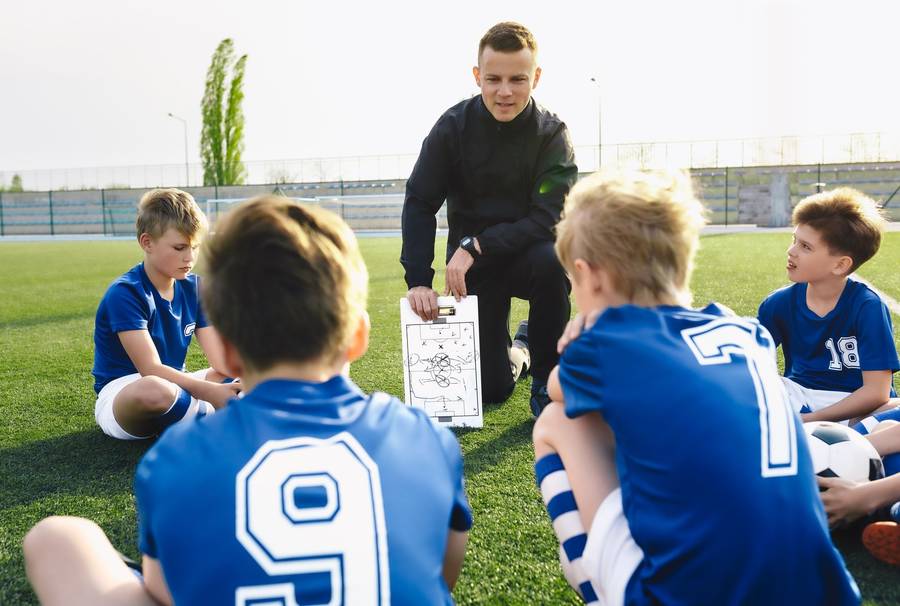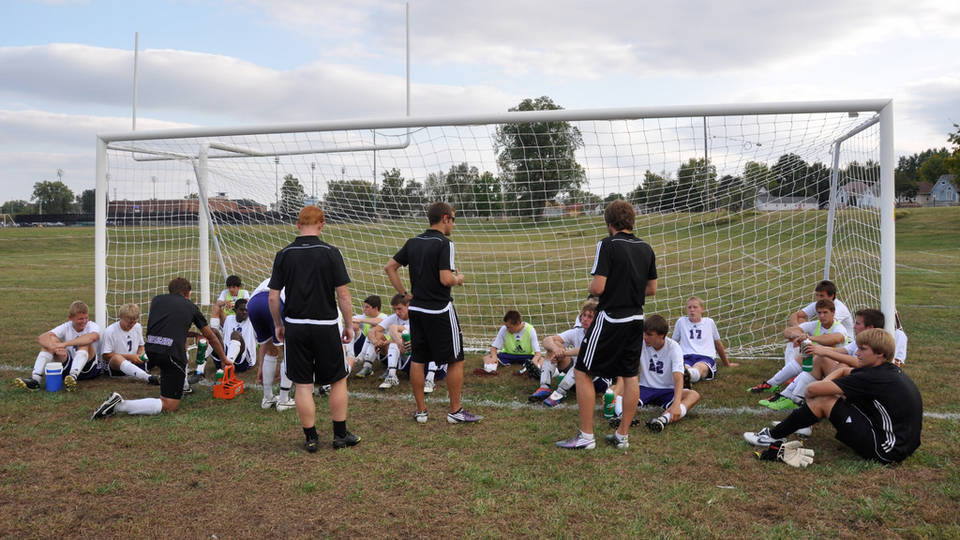

As a Manager or Coach of a junior football team you might think your responsibilities are pretty straight forward – the players, the parents and that’s probably it.
Well , I'm sorry to be the bearer of bad news, but it stretches a lot further than that!
You start by looking after a couple of training sessions and your players enjoy them and buy into them but then there seems to be an ever growing list of other things that appears and if you don't manage them no one else will!
Here we give you the public health warning on being a Manager of a junior football team and run through some of the less obvious things you might not yet have thought of but could very well end up coming your way soon.
The pitch
You probably think it's reasonable enough to expect the pitch to be available when you need it, but the reality for many junior football coaches is that they have to have some influence over this otherwise it simply doesn't happen.
Certain age groups are not allowed to play in full size goals anymore, which is a significant step forward for the good of their development but of course the reality of that situation is that you often find yourself constructing portable goals prior to every match. If you’re the kind of person who becomes easily frustrated at constructing an Ikea wardrobe the chances are you’re not going to enjoy slotting supposedly easy push fit plastic tubes into their male and female equivalents in a hail storm on a Sunday morning in January.
You might have thought the minimum you could expect would be to find that the pitch was marked out too but with many local councils under huge financial strain and with a number of parks maintenance contracts giving out to third party companies whose primary responsibility is to their own profit margins, it's not untypical to find yourself having to mark out touch lines with cones.
Then of course for safety you need to make sure that all the local dog owners who have used your pitch in the week have done so responsibly and picked up after their dogs otherwise that also becomes your job.
Kit and Equipment
Many well run clubs have a central arrangement for supplying kits to all of their teams but if you are unfortunate enough to be a stand-alone team or not affiliated to a central club or belong to a club with no such arrangements in place then guess what?…this soon becomes your responsibility too!
Given the sums involved it could be that you need a sponsor to offset the cost of the new kit if you don't have a business owning parents with a sense of benevolence then it could be you have to look to your own network of friends, associates and contacts and see who you can tap for a few hundred quid.
Arranging Matches
You would have thought this would be relatively straightforward, organising a kick-off time and sticking to it but anyone with any experience will tell you that it doesn't always work out like this. There are lots of different things that can get in the way of even the best laid plans.
For instance you might find yourself with your squad numbers stretched as people are away or committed to other things. Maybe you have to adjust your kick off time to make sure you can get the required number of players there to play and then of course that has to marry with the availability of the pitch if you share with another team.
Finding a referee
Of course, all of the match arrangements have to fit comfortably with the person that many local junior leagues consider to be the most important individual – the ref.
Many junior leagues will come down on you hard if you do not have a qualified and registered referee to look after your game and as a consequence there is huge pressure placed upon them and their availability can be scarce.
Not that this buys you any sympathy at the league and they expect you to have one at every game so you could very well secure yourself the use of your pitch, agree with the opposition to kick off at a certain time and be confident that you have enough players turning up to get a team out, but then of course the referee tells you they can only make a 10.00am kick off and not a minute later so your plans are scuppered.
Communication
Of course it is not enough to just make your arrangements, everybody needs to be kept in the loop and told about them so you have a responsibility to communicate. Endless questions about what’s happening with training this week, match kick-off times, meeting points and directions to away games all need to be headed off with some clear communication.
All of this sort of information will be shared with you first as the Manager and it is your responsibility to disseminate it to all relevant parties. The last thing you need is to turn up only to find your goalkeeper has been stranded on the wrong side of town because the person you thought was picking him up wasn't aware. I speak from experience!
The League
Quite simply, you have a responsibility to follow all of their rules, all of the time. Obviously the important stuff around safeguarding and first aid goes without saying, however who knows what your League committee have been dreaming up in their monthly meetings in the back room of the local pub for the last 30 years!
Expect to have to deal with some tight deadlines for providing results, player information, match information and the odd curve ball that doesn’t seem to make much sense.
Your team's finances
No matter what you feel the level of service of your training pitch provider, the local council’s grounds keeping staff or your referees, the one thing they all have in common is that they all need paying for. Depending on how adept you are at meeting your league’s responsibilities the chances are there’ll be the odd fine along the way too.
The long standing arrangement for funding a Junior Football Club is through players' subs, paid by parents but whether it is weekly, monthly or one off seasonal payment it doesn't take very long for this to become messy.
Again anybody with any experience will be able to tell you that not all your parents will have the right money at the right time. There is not a junior football manager out there who hasn't selffunded the different expenses incurred by the team at some stage. So not only should you be prepared to meet all of your responsibilities you should be prepared to temporarily fund some of them as well.
And it is not enough to keep a mental note of who is up-to-date and who is behind, some form of basic accounts will need to be kept to keep a track of all income and expenditure.
Other responsibilities
These are just some of the things you need to be mindful of if you are thinking of becoming a junior football manager because even with a group of willing parents who are prepared to get involved and help out, ultimately the responsibility remains with you.
This is in addition to all of the responsibilities you would automatically assume to have - the responsibility to your players, your responsibility to treat the whole squad fairly, and the responsibility to your parents.
Get some help
If the above is daunting and overwhelming and you’re starting to think this all might not be for you then DON’T WORRY because help is at hand. Thankfully we have some tools available to support us with some of the more mundane stuff.
TeamStats is a great example - a fully featured team management app which is a lifeline for many junior football managers and coaches.
The app provides you with a range of features to organise matches & training, track availability, communicate with your player’s and parents, and completely manage all of the team finances.
If you're a junior football Manager who is either new to the role or is starting to feel swamped by all their added additional responsibilities then you should really try to take advantage of the tools available to you and make your life much easier.